
Masajid Al Musalla

Masajid Al Musalla
Where the Prophet (peace be upon him) Prayed
In the heart of Madinah, where echoes of the Prophetic biography still linger, lies the Musalla Square to the west of the Prophet’s Mosque, between the dwellings of Banu Sa‘idah and Banu Zurayq. In the Prophet’s era, it was an open space free of buildings and trees. He designated it as a marketplace for the people of Madinah and as a place for performing the Eid prayers, the rain-seeking prayer (istisqā’), and the funeral prayer in absentia (ṣalāt al-ghā’ib). He also supplicated for its people there.
It was here that the Prophet (peace be upon him) performed the first Eid prayer after the Battle of Badr in the second year of Hijrah, and he continued to pray Eid there until his passing.
Due to the significance of this site, Muslims placed markers identifying the exact spots where the Prophet (peace be upon him) prayed. Later, when ‘Umar ibn ‘Abd al-‘Aziz served as governor of Madinah between 86–93 AH (705–712 CE), he built several mosques on the locations where the Prophet (peace be upon him) had prayed. These are:
Al-Musalla Mosque (Al-Ghamamah), Abu Bakr Al-Siddiq Mosque and Ali ibn Abi Talib Mosque,
all of which remain preserved to this day.
Mosques Built in the Musalla Area
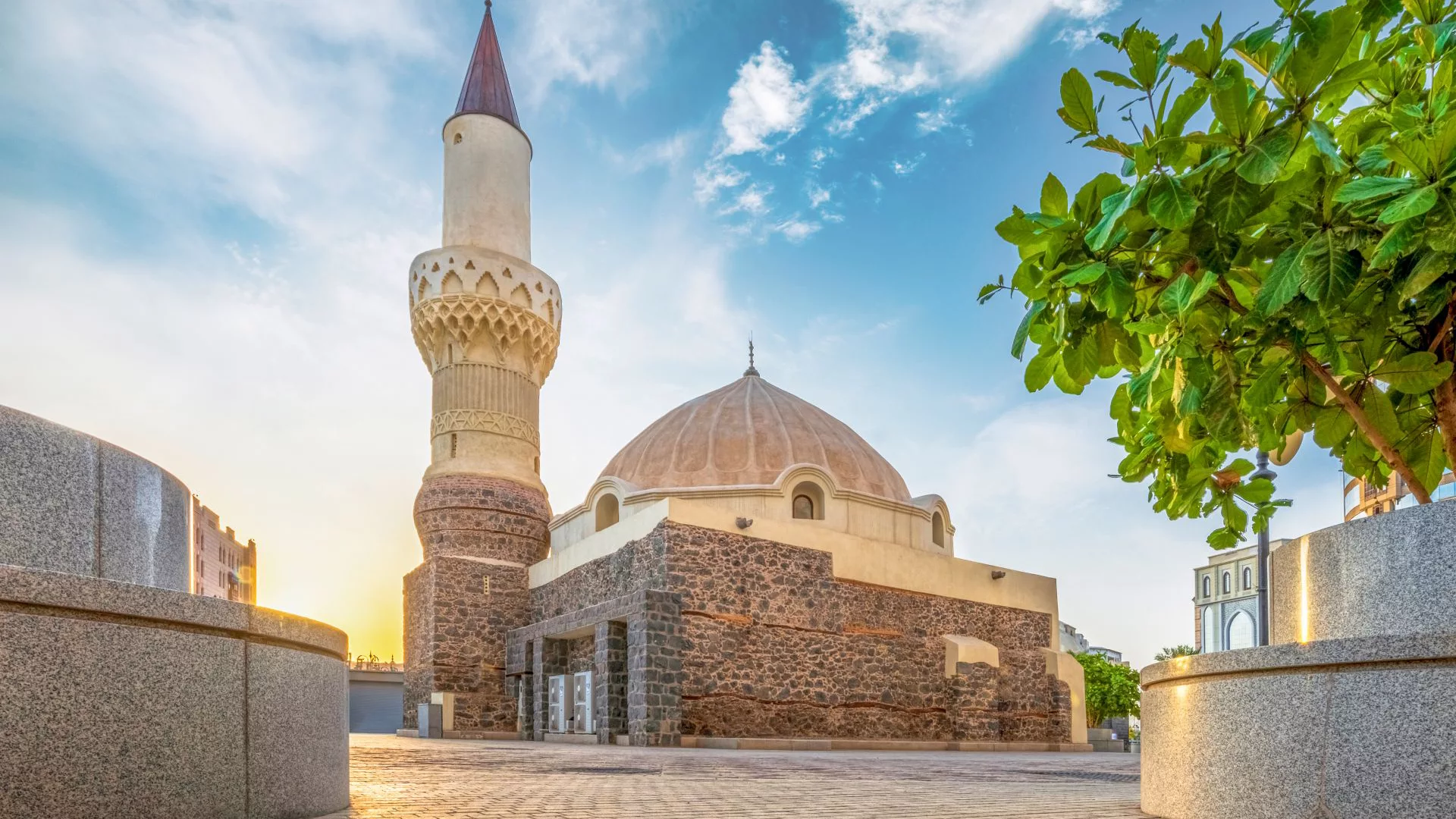
Al Musalla Mosque (Al-Ghamamah)
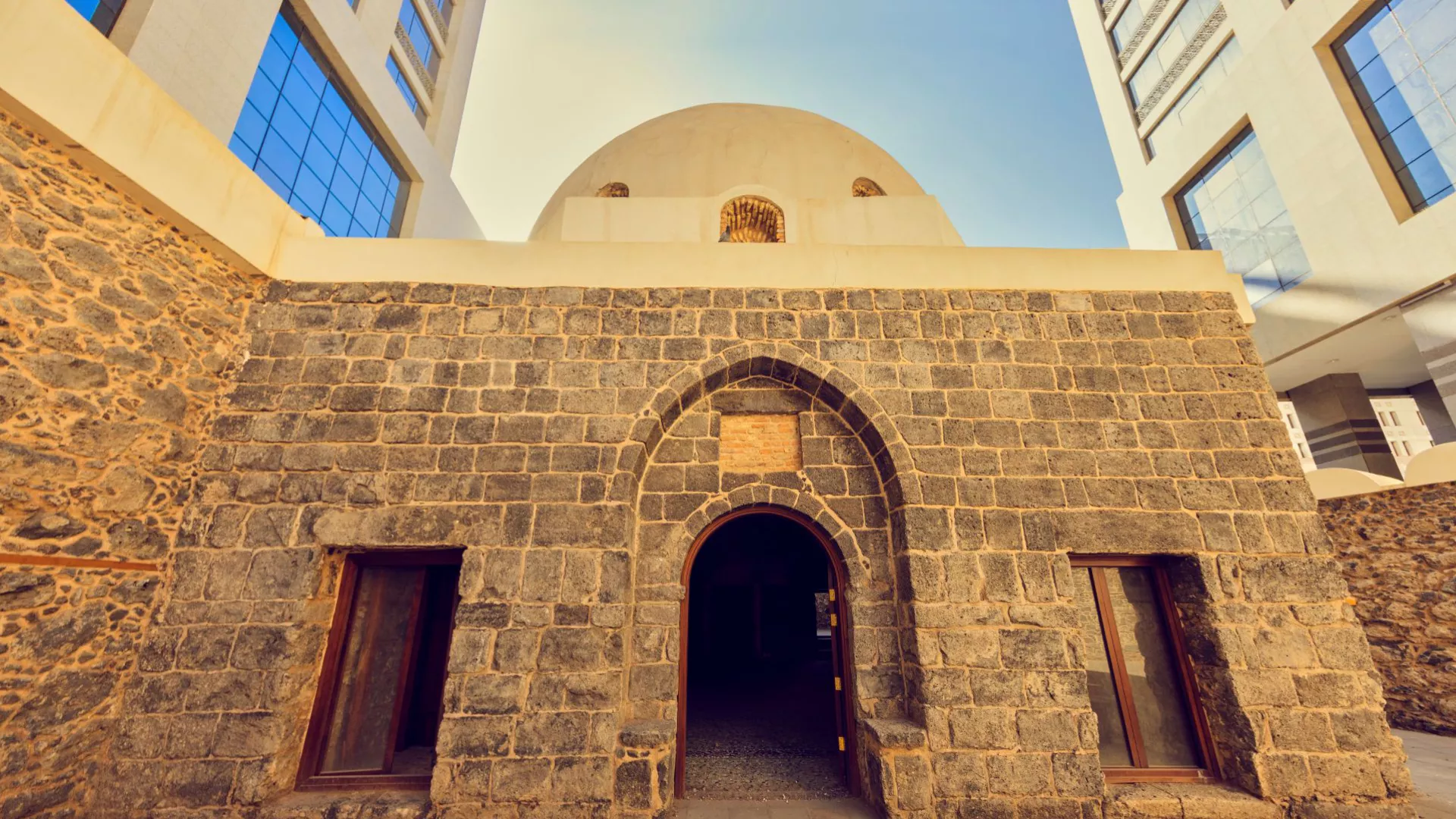
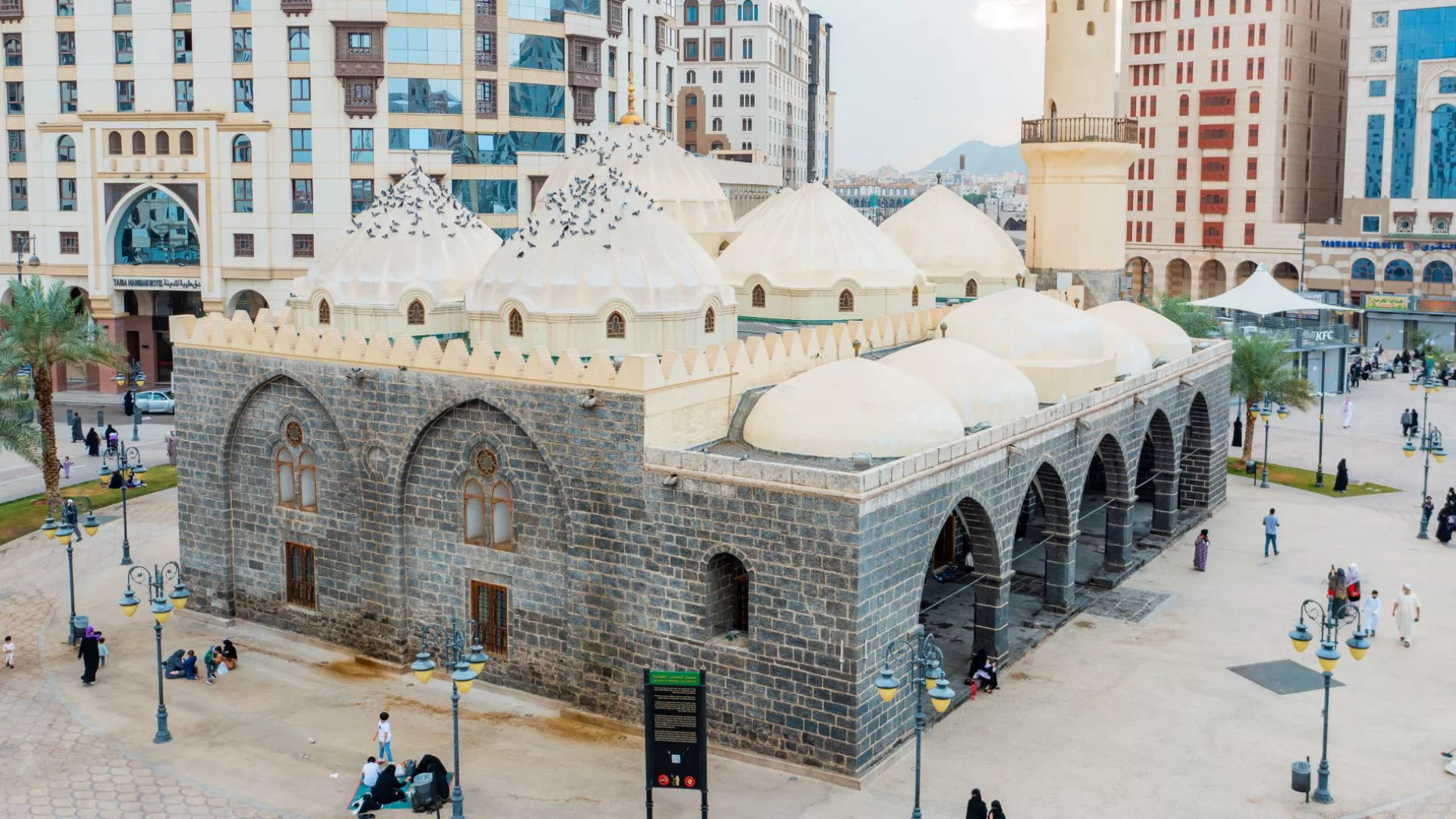
Al-Musalla (Al-Ghamamah) Mosque stands on the final location where the Prophet (peace be upon him) performed the Eid prayer, and he continued praying there until the end of his blessed life. For this reason, it was originally known as Al-Musalla Mosque, before later becoming known as Al-Ghamamah Mosque.
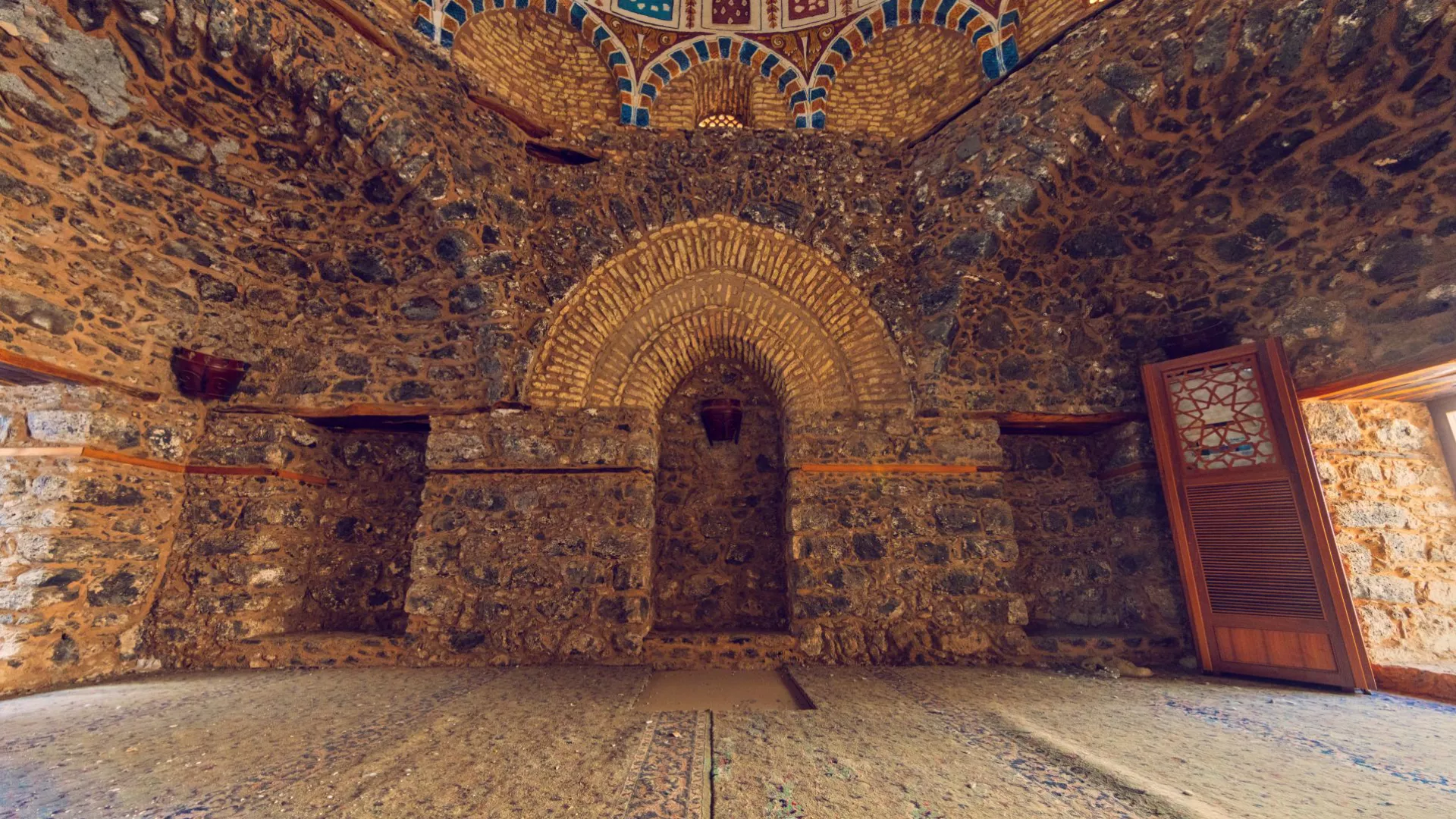
The mosque was first built during the Umayyad period by order of ‘Umar ibn ‘Abd al-‘Aziz, and it underwent several restorations throughout Islamic history. The government of the Kingdom of Saudi Arabia has given it great care, most notably during the comprehensive restoration in 1439 AH (2018). Its domes were finished with white plaster inside and out, while the distinctive black basalt stone was highlighted in the arches and walls — a design that harmoniously blends heritage with modern craftsmanship.
Abu Bakr Al-Siddiq Mosque (may Allah be pleased with him)
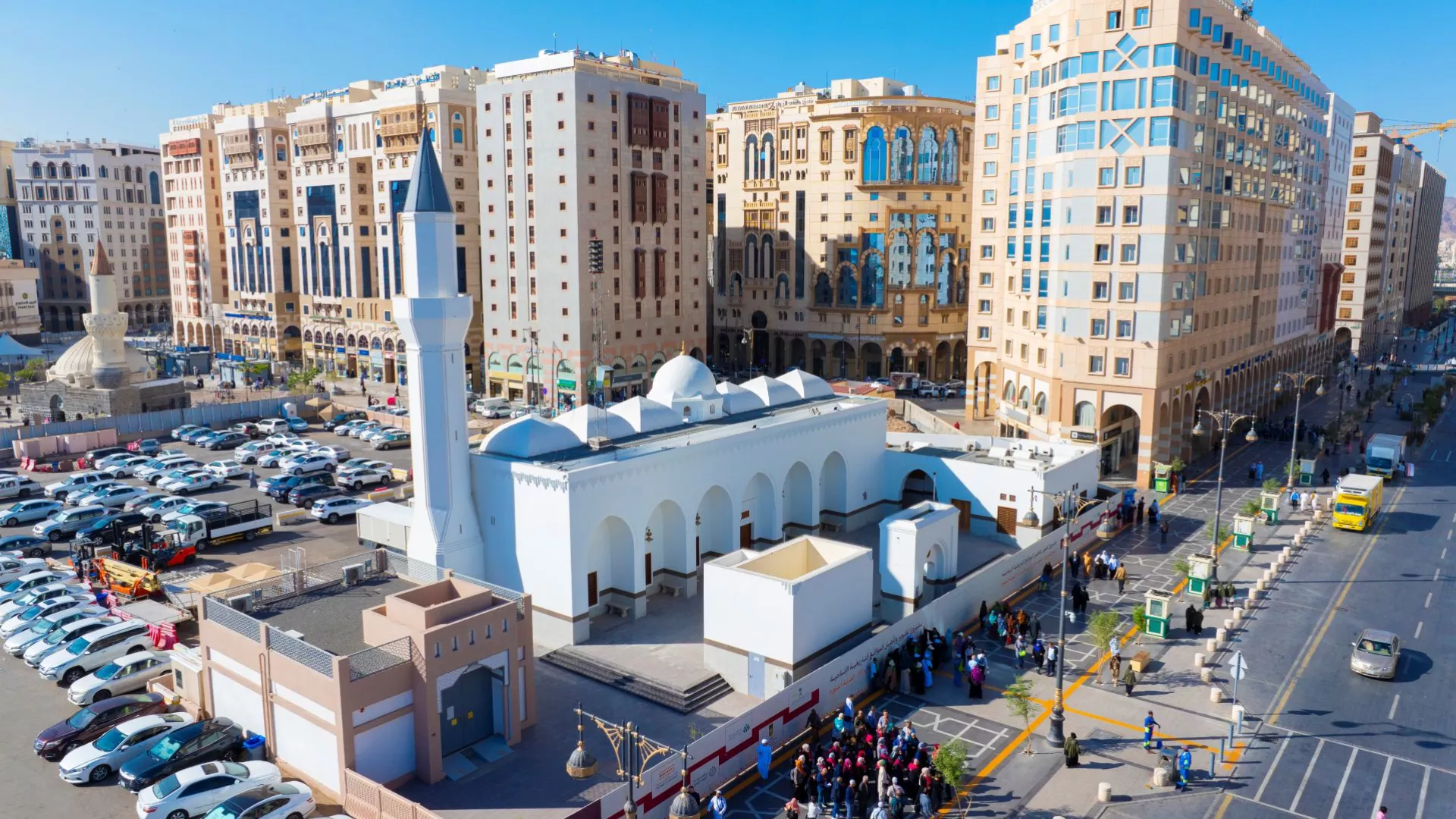
This mosque was built in the Musalla area at one of the locations where the Prophet (peace be upon him) performed the Eid prayer. Historical accounts suggest that Abu Bakr Al-Siddiq prayed Eid at this spot during his caliphate, leading to its association with his name. For nearly two centuries — the 7th and 8th AH — it served as the principal Eid prayer area for the people of Madinah.
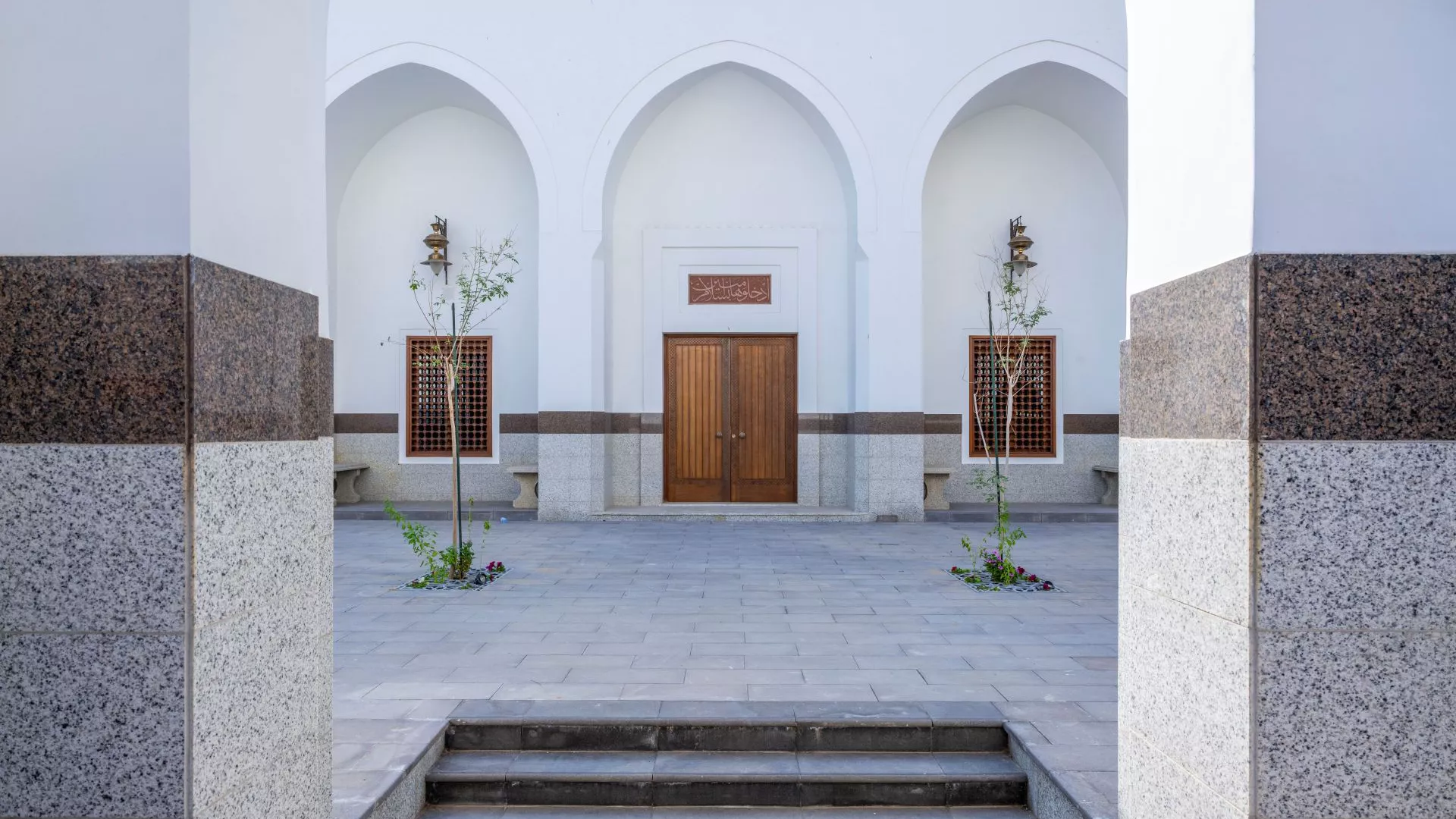
The first construction of the mosque was initiated by ‘Umar ibn ‘Abd al-‘Aziz during his governorship of Madinah (86–93 AH / 705–712 CE). Over the centuries, it witnessed multiple renovations, and its current structure dates back to 1254 AH (1838 CE). In the modern Saudi era, the mosque has received exceptional care, including restoration and preservation of its traditional character, ensuring it remains a living testament to the unity of worshippers gathered around the legacy of the Prophet (peace be upon him) during Eid.
Ali ibn Abi Talib Mosque (may Allah be pleased with him)
This mosque was built on one of the sites where the Prophet (peace be upon him) performed the Eid prayer. It was named after ‘Ali ibn Abi Talib because he led the Eid prayer at this location during the caliphate of ‘Uthman - hence its association with his name. Another view suggests the name was chosen simply to distinguish it from the other Musalla mosques.
The first construction dates back to the governorship of ‘Umar ibn ‘Abd al-‘Aziz (86–93 AH / 705–712 CE). The mosque has undergone several restorations throughout history. In the modern Saudi era, it was rebuilt in 1411 AH (1991 CE) and received further enhancement during the reign of King Salman bin Abdulaziz, with careful preservation of its historic architectural character — ensuring it remains a prominent landmark connected to the Prophetic Musalla.
‘Umar ibn Al-Khattab Mosque (may Allah be pleased with him)
This mosque was built in the southern part of the Musalla area after 850 AH (1446 CE) by Shaykh Shams al-Din Muhammad ibn Ahmad al-Salawi. It became popularly known as ‘Umar Mosque, a name that has endured to the present day.
Its current structure dates back to the 13th century AH. Many historians believe it was constructed on or near the site of the house of ‘Abdullah ibn Dhurah al-Muzani, the location where the Prophet (peace be upon him) performed his third Eid prayer. They suggest that this house was situated southwest of Al-Musalla Mosque, close to the current location of the mosque.
In the Saudi era, the mosque has received extensive care, including restoration, maintenance, and development works that preserved its architectural and historical significance, allowing it to stand as a witness to one of the notable sites of the Prophetic Eid prayers in Madinah.
The mosques of the Musalla area stand as lasting witnesses to moments illuminated by the light of Prophethood. They remind every visitor that Madinah still preserves places that breathe the fragrance of the Sunnah and the solemnity of prayer.
Information
Location:
Madinah
Time:
12:00 AM to 12:00 AM
Take on your own nature adventure
Embark on unforgettable journeys and explore the hidden gems across the heart of Saudi Arabia
To Do Things
Embark on unforgettable journeys and explore the hidden gems across the heart of Saudi Arabia


Related Packages
Embark on unforgettable journeys and explore the hidden gems across the heart of Saudi Arabia